The Second Cup on the Table: Why Background Details Sell a Room
Learn how repeated signs of use make a film room feel inhabited, giving actors and viewers a believable history without pausing for exposition.
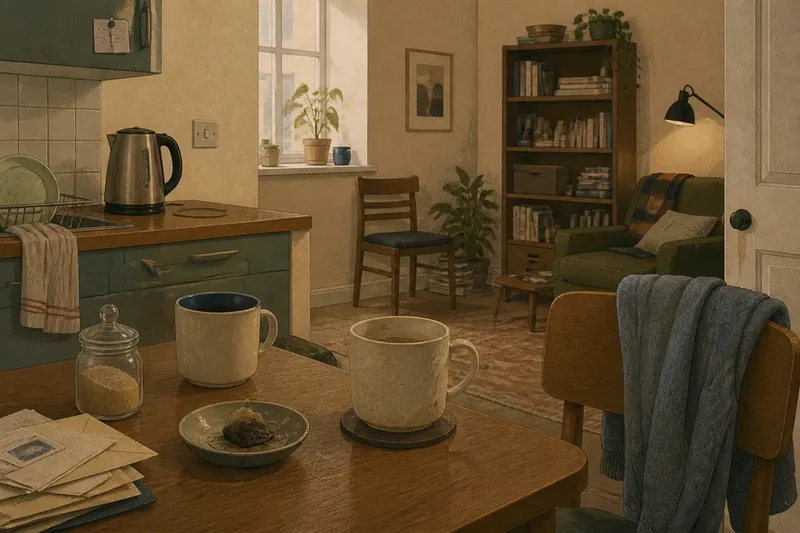
The common mistake in a film room is to make every object look newly placed. A spotless table, a perfectly aligned stack of mail and a single decorative mug can tell us the room was dressed, but not that anyone has lived there. The cost is a setting that asks the actors to supply all the history themselves. A second cup, left where someone actually stopped using it, can do quiet work the dialogue would otherwise have to carry.
That second cup matters not because it is a clever clue, but because it belongs to a pattern. Rooms feel inhabited when objects show repeated use: a chair that has become a laundry perch, a coaster with a pale ring, a drawer that never quite closes. Each detail suggests ordinary behavior continuing beyond the scene. The camera need not point at it. The viewer can register the room as a place with habits rather than as a backdrop assembled for this conversation.
Use Leaves a Pattern
A single object often reads as decoration. Several related traces read as history. A mug beside a kettle suggests a drink; a second mug on the table suggests that another person was there, or that one resident has not yet cleared up. Add a used tea bag in a small dish and the room begins to imply a routine. These signs do not need to tell a complete story. They only need to agree with one another.
Agreement is more important than quantity. If the room belongs to someone who works late, a half-empty water glass near a laptop, a cardigan over the chair and a lamp left on can form a coherent cluster. A pristine desk beside a chaotic bed might still be believable, but it should feel like a real contrast in the person’s habits, not an accidental mismatch. The details become persuasive when they seem to have grown from the same life.
Think of the room like a well-used kitchen drawer. Its contents are not arranged to explain the cook; the worn spatula, rubber bands and odd-size batteries simply reveal what tends to happen there. A screen room works similarly. The audience does not need an inventory. It needs enough recurring evidence to infer a human rhythm.
Build One Room’s Past
Say a filmmaker is staging an invented scene in a small apartment where two siblings meet after a long silence. The room is not meant to look abandoned or unusually messy. Its history should be visible in modest traces of daily use, while the emotional strain belongs to the actors and the conversation.
The set dresser begins with a simple premise: one sibling has stayed in the apartment, and the other has been away. Instead of adding a conspicuous photograph or a keepsake that announces the family story, the dresser gives the room a repeated breakfast habit. Two mismatched cups sit near the sink. One is clean; the other has a faint tea stain and rests on the table beside a coaster. A jar of sugar is within reach, while the kettle has a dry ring beneath it. These objects suggest that drinks are regularly made and that clearing up is not always immediate.
Then the dresser checks the same idea from other angles. A chair has a shallow crease in its cushion from frequent use. A small stack of envelopes has been moved aside to make space at the table. The window ledge holds a plant that is alive but unevenly grown toward the light. None of these items has to mean anything by itself. Together, they make the apartment feel maintained by someone who has routines, distractions and limited time.
During the scene, the visiting sibling reaches for the sugar without asking. The resident notices, but does not comment. That small action is possible because the room has supplied an everyday arrangement the characters can use. The second cup remains in the background; it does not become a symbol the film must explain. The expected result is a room that feels familiar to the characters before the dialogue establishes what has changed between them.
That is the useful lesson: background detail can prepare a behavior without dictating its meaning. If the visitor hesitates before taking the cup, the same set of objects may now suggest discomfort. If the resident clears the cup during a pause, the action may suggest a need to regain composure. The objects create a field of plausible actions, while performance and editing decide which one the audience sees.
Repeat Without Copying
Repetition does not mean placing multiple versions of the same prop around the frame. It means letting a habit leave traces in different forms. A person who reads at the table might leave a paperback there, use an old envelope as a bookmark and keep a reading lamp angled toward the same chair. The clues share a behavior, but they do not look like a deliberate display.
Choose details that can recur naturally. A chipped bowl may appear in the dish rack and later on the counter. A folded blanket can shift from the sofa to the armchair between scenes. A stack of mail can grow, shrink or move as someone handles it. This continuity gives the room a sense of time passing. If every object stays frozen in precisely the same arrangement, the set can start to feel like a photograph rather than a place people occupy.
For a production, this means tracking the objects that carry a room’s habits, not only the props an actor handles. A simple continuity note can record which cup is stained, where the envelopes sit and whether the blanket is folded or draped. The point is not to make every frame match mechanically. It is to keep changes readable: an object has moved because somebody used it, not because the room has silently reset.
Keep the Story Subtle
Too many meaningful-looking details can make a room feel like a puzzle box. A framed photograph, an untouched birthday card, a broken clock and a mysteriously empty chair may each suggest a backstory, but together they compete for attention. The viewer begins searching for the intended clue instead of staying with the scene.
One practical choice is to give the room a dominant routine and let the rest of the objects support it quietly. In the apartment scene, the routine is making tea and eating at the table. A dish towel, a sugar jar and the two cups reinforce it. A stack of mail can add texture, but it should not introduce a second dramatic mystery. If a detail needs dialogue to clarify why it is present, it may belong to the plot rather than the room’s ordinary life.
Placement also affects emphasis. An object centered in a clean, wide frame looks selected, even when no one touches it. A cup partly obscured by a sleeve, a chair back or the edge of the shot can remain part of the environment. The director can bring it forward later if the story needs it, but the room should not announce every detail at once.
Room Details That Read?
How many repeated details does a room need?
Use enough to establish a recognizable routine, then stop before the room feels cataloged. A few mutually consistent traces usually read more naturally than many unrelated objects arranged to prove that the room is lived in.
Should a background object change between scenes?
It can, if the change suggests ordinary use or a clear story event. A moved cup or handled stack of mail may help time pass; an unexplained shift in a prominent prop can distract viewers who remember its earlier position.
What makes a detail feel too symbolic?
A detail can feel overemphasized when it is isolated, unusually prominent or repeatedly framed as if it carries a secret. Keeping it among practical objects and allowing characters to behave naturally around it helps preserve its everyday quality.
Can a sparse room still feel inhabited?
Yes. A room with few possessions can feel specific through wear, placement and one clear habit, such as shoes kept by the door or a regularly used chair with a cushion shaped by use. Sparse does not have to mean untouched.
Let the Room Breathe
The strongest background detail is not necessarily the most unusual one. It is the one that fits the room’s routine so well that a viewer accepts it without stopping to decode it. For the invented apartment, the cups work because the kettle, table and small signs of cleanup support the same everyday behavior. If the film later needs the second cup to carry emotional weight, it has earned that possibility by first letting it be just a cup.
When shaping a believable film room, look for traces that can support more than one moment: an object someone can reach for, a habit that leaves a mark, or an arrangement that makes sense before anyone explains it. The search phrase “background details in film” points to a craft worth noticing, but the practical test is simple: can the room suggest what people do there while leaving the scene free to surprise us? A convincing room keeps living in the viewer’s mind after attention returns to the actors.