Why Constant Room Tone Can Make Film Sound Less Real
Film sound realism depends on changing attention, not nonstop room tone. Learn when ambience should recede so a pause, breath, or small sound feels believable.
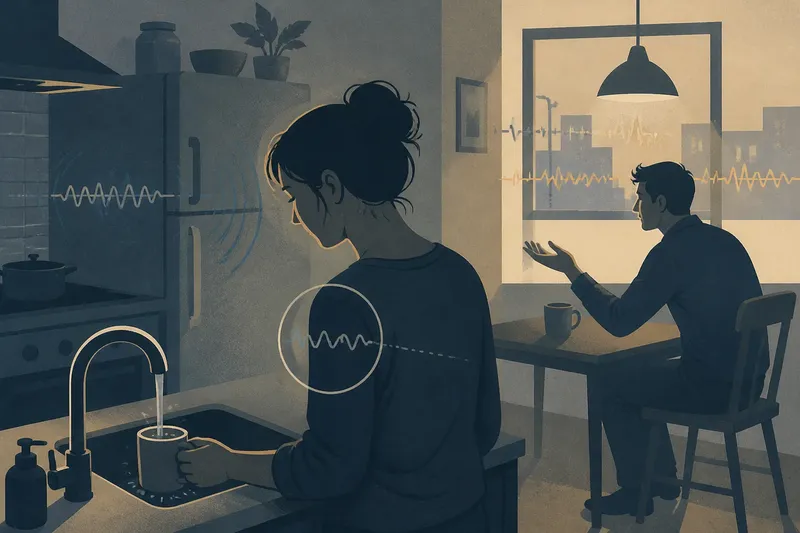
The common mistake in film sound realism is treating constant room tone as proof that a scene is authentic. A steady wash of kitchen noise can make a quiet moment feel less convincing, because the audience hears the mix rather than a character’s changing attention. The myth is not that room tone belongs in films; it is that more of it always means more realism.
Room tone is not realism
A kitchen might contain a refrigerator motor, a faucet, footsteps, traffic beyond the window, and a chair scraping tile. A film does not need to keep every source equally audible. In daily life, familiar sounds often fade from awareness until something changes; a soundtrack can follow that shift instead of presenting a continuous inventory of noises.
Constant ambience can also compete with a scene’s purpose. If someone admits a mistake in a low voice, a prominent exhaust fan may draw attention away from the performance. Softening that fan can make the moment feel more natural, even though the mix contains less of the room’s possible sound.
Think of sound like a desk drawer: it can hold many useful objects, but tipping everything onto the table does not make the drawer feel more real. The mix has to select what belongs in the listener’s attention.
Attention shapes sound
Sound realism depends partly on what a character notices. Someone waiting for an answer may hear a refrigerator click off; someone absorbed in chopping vegetables may barely register a car passing outside. The room has not changed, but the perceived room has.
A mixer can suggest this shift through level, texture, and timing. Background ambience might recede as a character stops moving, while a spoon tapping a mug becomes clear after a difficult question. The scene can feel quiet without going acoustically blank: breath, fabric movement, or distant traffic may remain.
This approach can establish point of view without explanatory dialogue. Bringing forward a character’s breathing may make the viewer feel close to their anxiety. Keeping the room acoustically broad can instead preserve a sense of shared space.
When does quiet feel real?
Does a realistic scene need room tone?
Room tone can help shots feel like they belong to the same space, but it need not stay prominent. Its level and detail can shift with the scene’s focus.
Is quiet the same as muting everything?
No. A quiet scene may retain breath, clothing movement, or distant exterior sound. Selective silence usually means reducing competing elements, not erasing every audible cue.
Why can a small sound feel important?
A sound may stand out because little else occupies the foreground, or because it connects to what a character is watching or waiting for. Its placement gives it meaning, not loudness alone.
Build a meaningful pause
Imagine a scene that begins with a character rinsing a mug while a refrigerator hum and faint street traffic establish the kitchen. Another person asks whether they are leaving. The character stops, mug still beneath the faucet. In this invented situation, the sound design lets the water taper off, softens the refrigerator, and leaves a brief breath before the answer. The expected observable result is that the viewer notices the hesitation without a musical cue explaining it.
The useful question is not simply what noises a kitchen could contain. Ask which sounds matter to this exchange and which the characters would stop noticing. That keeps the mix tied to performance, while leaving room for ordinary ambience when the scene calls for it.
Keep the space continuous
Selective quiet still needs continuity. Across cuts, a consistent acoustic bed can help the kitchen feel like the same room, even when the mix lets that bed recede beneath a close detail or a meaningful pause. Room tone supports the scene when it holds the space together; it becomes a distraction when it demands attention without serving the moment.
For film sound realism, the useful distinction is between a sound being present and a sound being noticed. Let the refrigerator hum support the room when continuity matters, then allow it to slip from focus when a character’s stillness takes over. The audience can hear less and believe more, provided the change follows the scene’s attention rather than a fixed rule about silence.